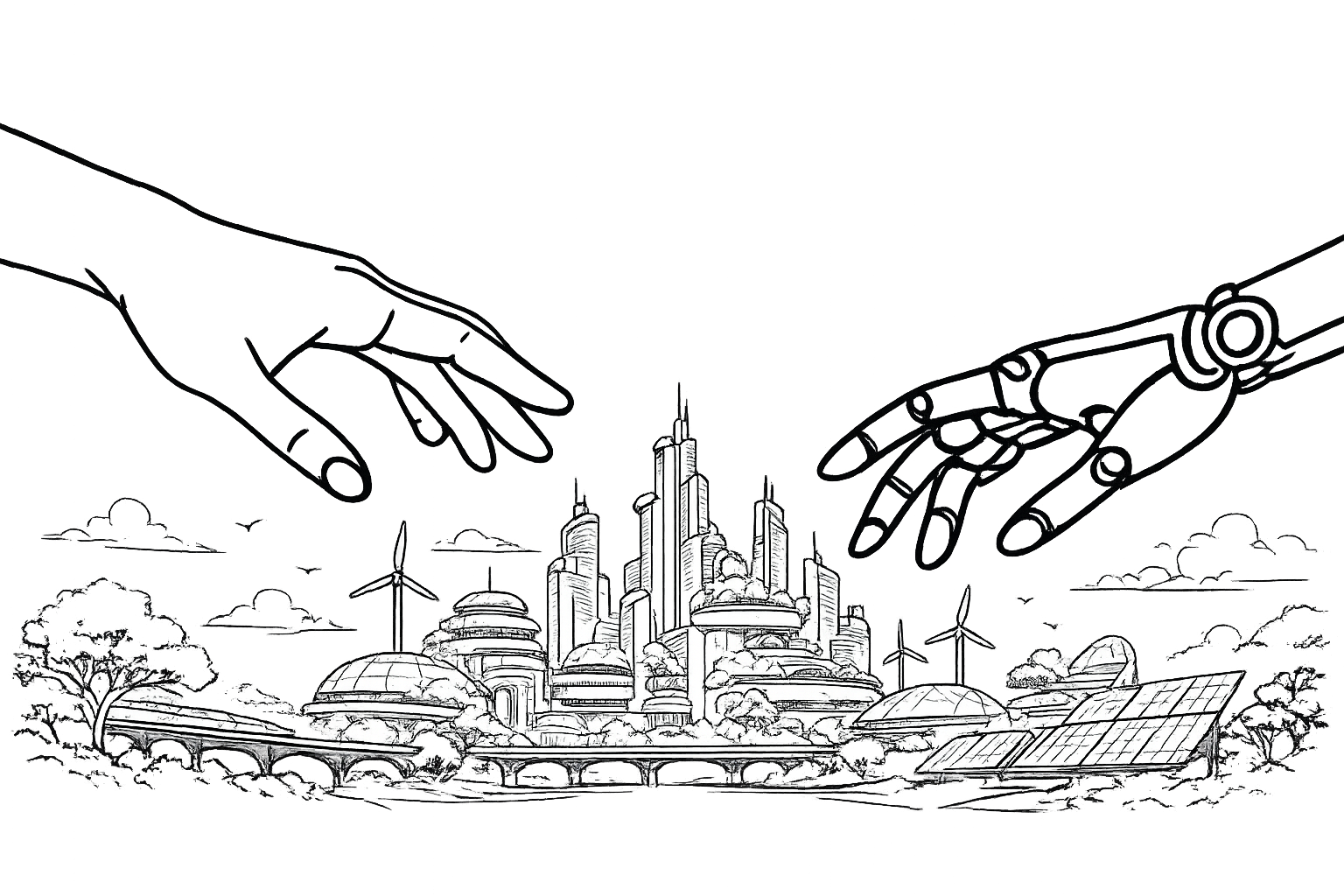
Why I Write About the Human Future
I've always been fascinated by the future.
Thinking about it and imagining it has been a passion since I was a child. I studied geology because I was always told that to understand the future, you first need to understand the past. Geology is exactly that: reading the history of the Earth to better understand where it is going. It also led me to study past climate change, because understanding yesterday helps us prepare for tomorrow.
Life then brought me to technology. It wasn't by chance. Since I was young, I had been passionate about building things. I inherited that passion from my father: programming microchips, building printed circuit boards, writing code... simply creating. Today, as a technology executive, my job is still about looking ahead, but in a world where there is no blueprint and no previous experiment to follow. I still believe that understanding the past helps us make better decisions about the future.
The birth of my children made that reflection much more personal. Like every parent, I worry about their future. I ask myself what kind of world we are leaving them.
Humanity faces enormous challenges: climate change, wars, poverty, famine... At the same time, technology is advancing at an extraordinary pace. The emergence of artificial intelligence has brought us to the edge of a technological revolution that may rival, or even surpass, the Industrial Revolution in its impact on humanity.
But technology alone will not determine the future.
The most important question is not how intelligent our machines become. It is how we choose to use them, and what kind of humans we become alongside them.
This new era could elevate humanity, or it could diminish it.
I find it remarkable that we invest billions pursuing immortality and colonising other planets, while children still die from preventable diseases and much of our own oceans remain unexplored. These contrasts remind us that technological progress is not the same as human progress.
This blog is not about predicting the future.
It is about asking what kind of future is worth building—and what place humanity should have within it.